
Seeking an autism assessment in Sydney that families and adults trust can feel daunting, especially if you’re not sure what to expect on the day. The good news is that a proper autism diagnosis process is structured, collaborative, and designed to give you clear answers rather than confusion. Whether you’re booking an assessment for a child showing early signs, or as an adult who suspects you may be on the spectrum, understanding each stage of the process can ease a lot of the uncertainty.
Why Do People Seek an Autism Assessment?
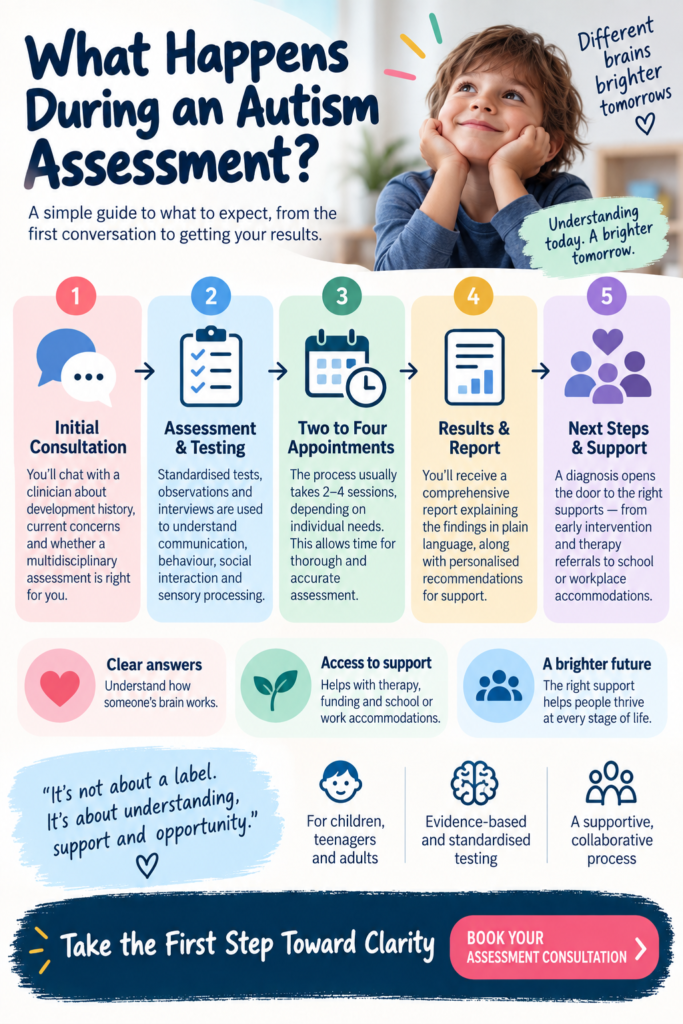
Many families notice differences in communication, social interaction, or sensory processing during early childhood, while some adults only recognise these patterns later in life after years of feeling “different” without knowing why. A formal developmental assessment provides clarity, access to support services, and, in many cases, funding eligibility for therapies like speech pathology, occupational therapy, or early intervention programs. Getting answers isn’t just about a label; it’s about understanding how someone’s brain works so they can get the right support.
Wondering if an assessment is the right next step? Reach out to Capacity Partners Therapy for a confidential chat about your options.
What’s Involved in the Initial Consultation?
Most autism assessment Sydney start with an intake session, where a clinician gathers background information: developmental history, family history, school or work reports, and specific concerns you’d like addressed. This is also the stage where you’ll discuss whether a multidisciplinary assessment (involving a psychologist, paediatrician, or speech pathologist working together) is appropriate, or whether a single clinician can conduct the full evaluation.
What Standardised Tests Are Used During Assessment?
Clinicians typically use internationally recognised, standardised testing tools to assess behaviour, communication, and social interaction patterns. Common tools include structured play-based observations, parent or caregiver questionnaires, and direct interviews with the person being assessed. These tools are chosen because they align with established diagnostic criteria, ensuring the process is evidence-based rather than subjective. For children, this often includes observing play and interaction; for adults, it may involve detailed interviews about childhood history and current experiences.
How Long Does an Autism Assessment Take?
The full behavioural assessment process usually spans two to four appointments, though this varies depending on the clinic and complexity of the case. A single session rarely provides enough information for an accurate diagnosis, which is why thorough clinics take a staged approach: information gathering, direct observation or testing, and a feedback session where results are explained in full.
Ready to book your first appointment? Capacity Partners Therapy offers flexible scheduling to fit around school, work, or family commitments.
What Happens After the Assessment Is Complete?
Once testing is finished, the clinician compiles findings into a comprehensive report outlining whether the person meets criteria for autism spectrum disorder, along with recommendations for support. This report is essential for accessing funding, school accommodations, or workplace adjustments. A good clinic will walk you through the results in plain language during a feedback session, rather than simply handing over a document full of clinical jargon.
What Support Comes Next?
A diagnosis is the beginning of a support pathway, not the end of the process. Depending on individual needs, this might include early intervention programs for young children, therapy referrals, funding applications, or simply a better understanding of how to advocate for accommodations at school or work. The right clinic won’t just diagnose and disappear; they’ll help connect you with the next steps.
Final Thoughts
An autism assessment Sydney families can rely on should feel supportive, thorough, and clear from start to finish. Understanding what to expect at each stage removes much of the anxiety around the process, so you can focus on getting the right answers and the right support.
Take the first step toward clarity. Contact Capacity Partners Therapy today to book your autism assessment consultation.
Can adults get an autism assessment?
Yes, adult autism diagnosis pathways are increasingly common and follow a similar structured process to childhood assessments.
Do I need a referral to book an assessment?
Some clinics accept self-referrals, while others require a GP or paediatrician referral, particularly for Medicare rebate eligibility.
How accurate are autism assessments?
When conducted using recognised diagnostic criteria and standardised tools, assessments are highly reliable, though outcomes depend on clinician experience.
What age can a child be assessed for autism?
Assessments can begin as early as 18 months to 2 years, though many children are assessed between ages 2 and 6.
Will my child need multiple appointments?
Most developmental assessment processes involve two to four sessions to ensure accurate results.
What’s the difference between screening and a full assessment?
Screening is a quick initial check for risk indicators, while a full behavioural assessment provides a formal diagnosis.
Does a diagnosis affect school funding?
Yes, a formal diagnosis often opens access to school-based support and funding for early intervention services.
Can an assessment rule out autism?
Yes, a thorough evaluation can also confirm that a person does not meet criteria for autism spectrum disorder, offering clarity either way.
What should I bring to the first appointment?
Bring any prior reports, school feedback, developmental history notes, and a list of specific concerns or questions.

