

Choosing the right behaviour support practitioner is an important decision for individuals, families and carers seeking personalised support. A skilled professional can help understand behaviours, identify underlying needs and develop practical strategies that improve daily experiences and overall wellbeing. With many providers available, knowing what to look for can make the selection process easier.
A qualified behaviour support practitioner in Sydney can provide evidence-based guidance while working closely with individuals, families and support networks. The right practitioner should focus on understanding each person’s unique circumstances and creating meaningful strategies that support independence, participation and quality of life.
Understand the Role of a Behaviour Support Practitioner
A behaviour support practitioner works with individuals who may experience behaviours of concern or challenges that affect daily activities, relationships or community participation. Their role involves identifying triggers, understanding behaviour patterns and developing positive support strategies.
Rather than focusing only on changing behaviour, a good practitioner aims to understand the reasons behind behaviours and address unmet needs. This person-centred approach helps create respectful and effective support plans tailored to individual goals.
Look for Relevant Qualifications and Experience
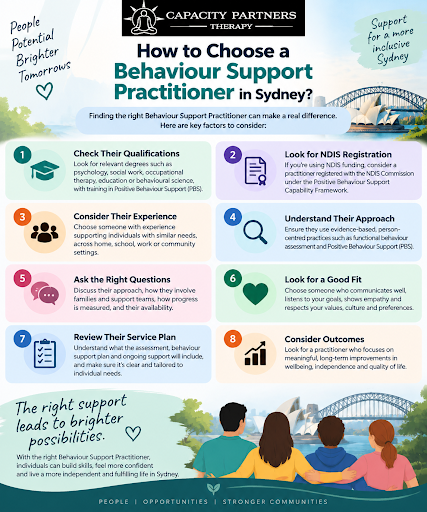
When choosing a practitioner, it is important to review their qualifications, experience and approach to support. A professional with relevant training and experience should have a strong understanding of behavioural frameworks, disability support needs and evidence-based practices.
Experience working with different age groups, abilities and support requirements can also be valuable. A practitioner who listens carefully and communicates clearly can help individuals and families feel comfortable throughout the support process.
Consider the Importance of Behavioural Assessments
A comprehensive assessment is an essential part of effective behaviour support. A behavioural assessment in Sydney helps practitioners gather information about behaviour patterns, environmental factors, communication needs and possible triggers.
Through detailed assessment, practitioners can develop strategies that are practical, personalised and focused on improving daily outcomes. This process may involve discussions with individuals, families, carers and other support professionals to gain a complete understanding of the person’s needs.
Choose a Practitioner Who Provides Personalised Support
Every individual has different goals, preferences and challenges. The best behaviour support practitioners create personalised plans rather than using a one-size-fits-all approach. Look for a provider who values collaboration and involves the individual and their support network in decision-making. Open communication, regular reviews and flexible strategies are important for ensuring the support plan continues to meet changing needs.
Evaluate Communication and Ongoing Support
A strong relationship between the practitioner, individual and family is essential for successful outcomes. Choose someone who explains recommendations clearly, responds to concerns and provides ongoing guidance when required.
Effective behaviour support is an ongoing process that may require adjustments over time. A practitioner who provides consistent support can help individuals build confidence and achieve meaningful progress.
Selecting the right behaviour support practitioner in Sydney involves considering experience, qualifications, assessment methods and the ability to provide personalised care. A skilled professional can help individuals better understand behaviours, develop practical strategies and work towards improved independence and wellbeing.
Book An Appointment Today
If you are looking for compassionate and personalised behaviour support solutions, Capacity Partners Therapy provides professional guidance tailored to individual needs. Contact Capacity Partners Therapy today to learn how their experienced team can support you or your loved one with effective behaviour support services.
Call us at 0488544885 or email us at info@capacitypartners.com.au for more information.
How do I find a qualified Behaviour Support Practitioner in Sydney?
To find a suitable Behaviour Support Practitioner in Sydney, look for someone with relevant qualifications, experience, and registration with recognised professional bodies. If the person receives NDIS support, check whether the practitioner is registered under the NDIS Commission’s Positive Behaviour Support Capability Framework. You should also consider their experience working with similar needs, communication style, availability, and approach to behaviour support.
What qualifications should a Behaviour Support Practitioner have?
A qualified Behaviour Support Practitioner should typically have relevant education in areas such as psychology, social work, occupational therapy, education, counselling, or behavioural science. They should also have training and experience in evidence-based approaches, including Positive Behaviour Support (PBS), functional behaviour assessment, and behaviour support planning.
Why is experience important when choosing a Behaviour Support Practitioner?
Experience matters because every individual’s needs, environment, communication style, and challenges are different. A practitioner with experience supporting similar situations can better understand potential triggers, identify effective strategies, and create realistic plans that work in everyday settings across home, school, work, or community environments.
What questions should I ask a Behaviour Support Practitioner before hiring them?
Before choosing a Behaviour Support Practitioner in Sydney, consider asking:
- What experience do you have supporting people with similar needs?
- Are you experienced with NDIS Positive Behaviour Support?
- How do you assess behaviours and develop support strategies?
- How do you involve families, carers, and support workers?
- How will progress be measured?
- What is your availability and communication process?
These questions can help you determine whether their approach matches your expectations.
How does Positive Behaviour Support help individuals?
Positive Behaviour Support (PBS) focuses on understanding why behaviours occur and improving the person’s environment, communication, and support systems. Instead of simply trying to stop a behaviour, PBS aims to address underlying needs, teach new skills, and create positive changes that improve independence and wellbeing.
Should I choose an NDIS-registered Behaviour Support Practitioner in Sydney?
Choosing an NDIS-registered Behaviour Support Practitioner can be beneficial, especially for participants with NDIS funding who require specialist behaviour support services. Registered practitioners must meet specific quality and safeguarding requirements set by the NDIS Quality and Safeguards Commission, providing additional confidence in their professional standards.
How much does a Behaviour Support Practitioner cost in Sydney?
The cost of a Behaviour Support Practitioner in Sydney depends on factors such as the practitioner’s qualifications, experience, service type, and whether the support is funded through the NDIS. NDIS participants should review their plan budget and discuss fees, session frequency, reporting requirements, and other costs directly with the provider.
How long does it take to see results from behaviour support?
The timeframe for seeing improvements varies depending on the individual’s goals, behaviours, environment, and level of support required. Some changes may occur within weeks, while more complex behavioural goals may require ongoing assessment, strategy adjustments, and collaboration between the practitioner, family, and support team.
What makes a good Behaviour Support Practitioner in Sydney?
A good Behaviour Support Practitioner combines professional knowledge with empathy, patience, and strong communication skills. They should take a person-centred approach, respect individual preferences, involve key support networks, use evidence-based strategies, and focus on creating meaningful improvements in everyday life.

